Miami has always been a city of spectacle. From the neon glow of Ocean Drive to the midnight sparkles over Biscayne Bay, this city thrives on visual impact. However, in recent months, a new question has begun to drift through the humid Atlantic air: Are we witnessing the end of the pyrotechnic era? The debate surrounding drone shows fireworks is heating up faster than a South Beach summer.
The Roar of Gunpowder vs. The Silence of LEDs
Traditionally, we can’t imagine a 4th of July or New Year’s Eve in Miami without the thunderous boom of fireworks. But let’s be honest: that “boom” that thrills many of us is a recurring nightmare for our pets and the local wildlife in the Everglades.
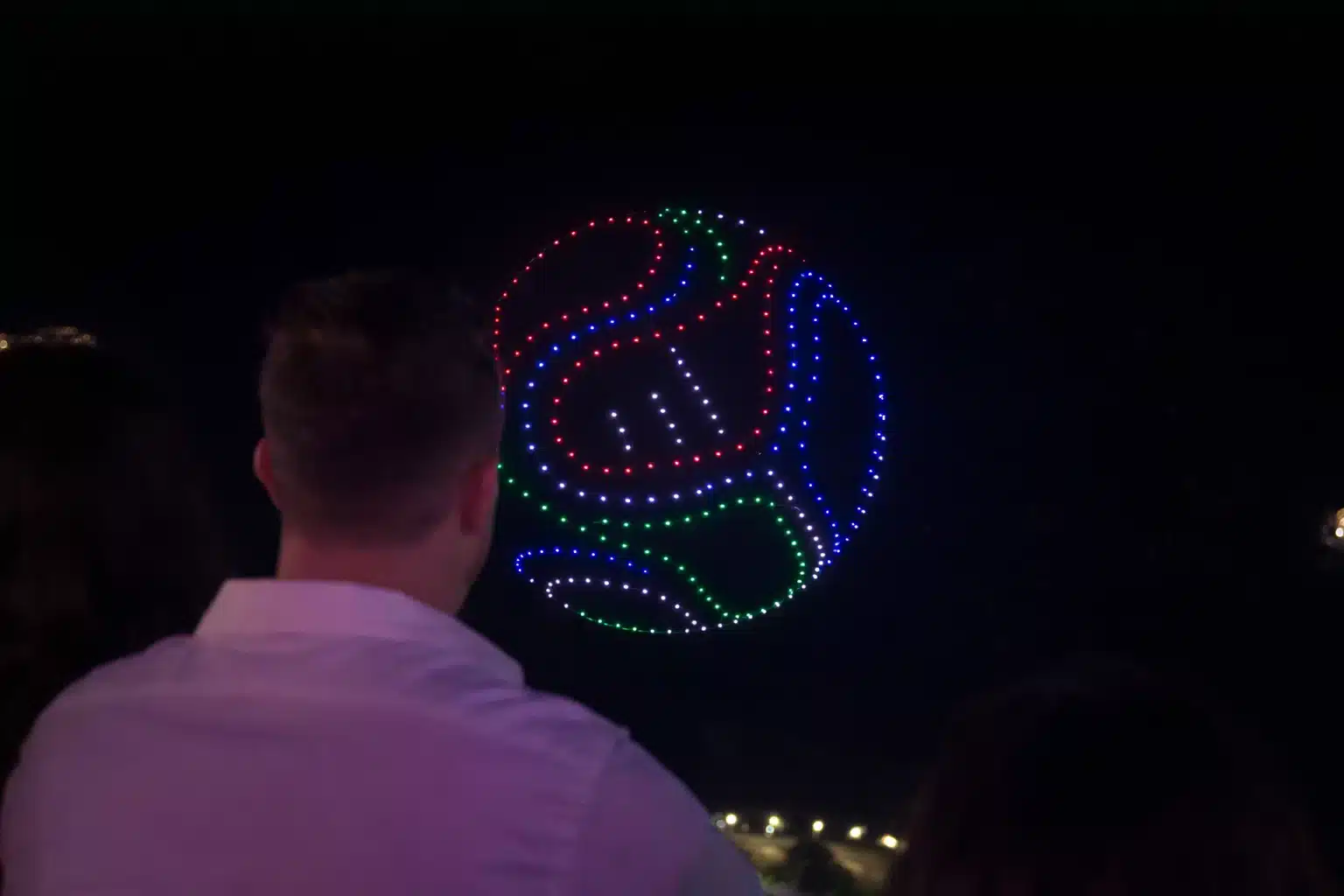
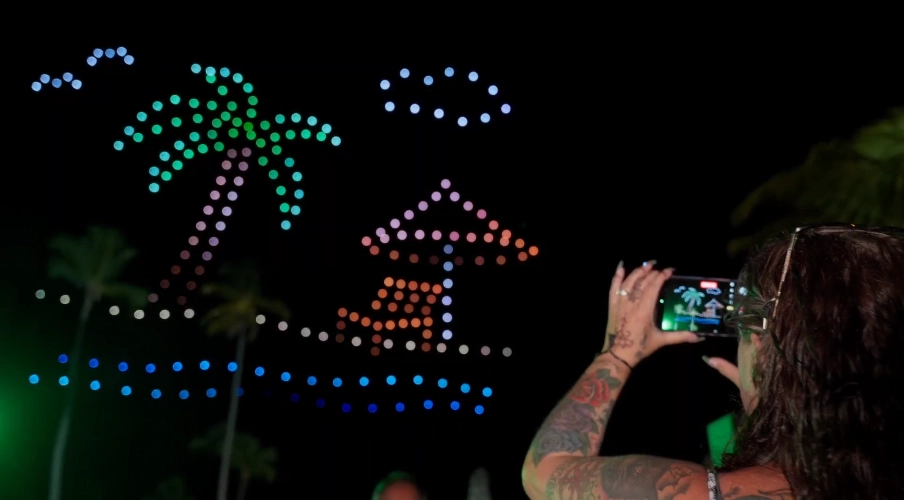
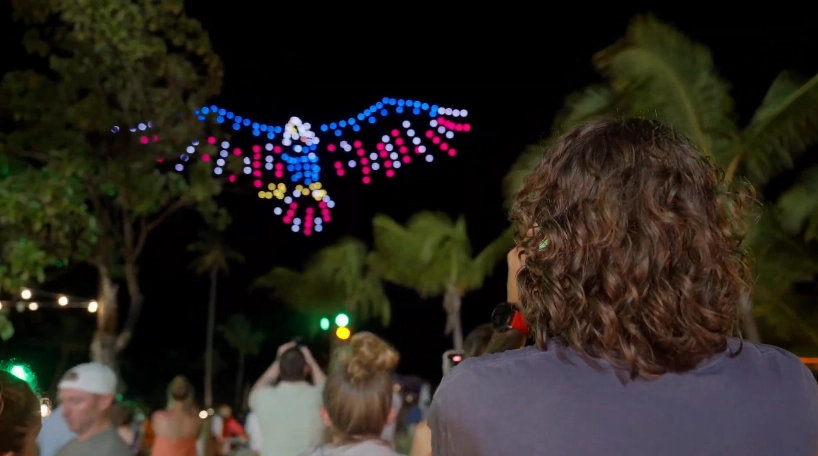
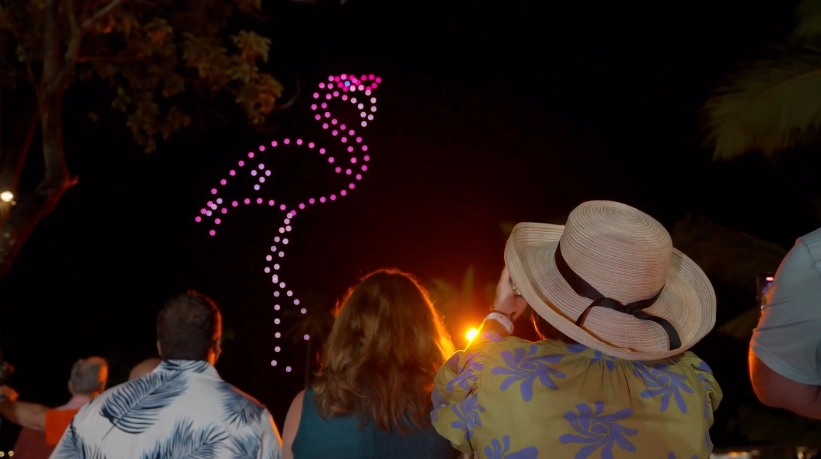
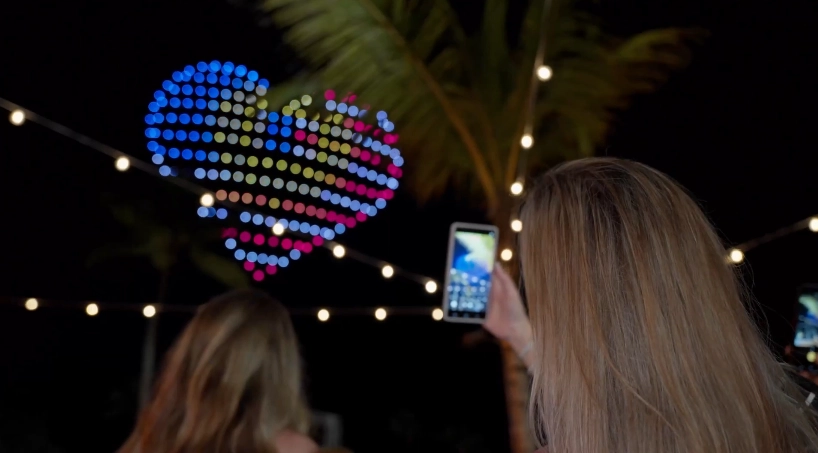
This is where drone shows fireworks come into play as a surgical alternative. Instead of random explosions, we have hundreds of synchronized LED drones choreographed by algorithms, drawing 3D figures in the sky. Can you imagine seeing a giant palm tree or the Inter Miami CF logo floating over the water with millimetric precision? That is something that gunpowder, as beautiful as it is, simply cannot replicate.
Sustainability: Is Miami Becoming a “Green-Tech” Hub?
One of the strongest arguments in this transition is the environmental footprint. Miami is a coastal city that lives off its waters, and the heavy metal residues and microplastics that fall into the ocean after a traditional fireworks display are a growing concern for the city commission.
- Zero Waste: Drones return to their landing pads. No debris in the ocean.
- Smoke-Free: Air quality remains intact, which is vital for massive outdoor gatherings.
- Reusability: While a rocket burns up in seconds, a drone can fly hundreds of times.
Given this shift toward eco-consciousness, we have to ask: Are we willing to trade a century-old tradition for a cleaner future for our beaches?
Can Drones Match the Adrenaline of Fireworks?
Despite the innovation, critics argue that drones lack “soul”—or rather, that physical vibration you feel in your chest when a shell explodes nearby. Pyrotechnics are visceral; drones are artistic.
However, in places like Fort Lauderdale and Miami Beach, hybrid models are already being tested. Local tech companies are securing FAA waivers to combine the best of both worlds: “pyro-drones” that carry small cold-spark emitters, creating a hybrid that maintains the excitement while reducing the chaotic noise and smoke.
The Business of the Sky: Logistics and Branding
When it comes to business, Miami doesn’t play around. Organizing a drone shows fireworks event in 2026 requires high-precision logistics. While the initial tech investment is higher, the insurance costs and fire department permits are often more manageable than handling explosives in dense urban areas like Brickell or Edgewater.
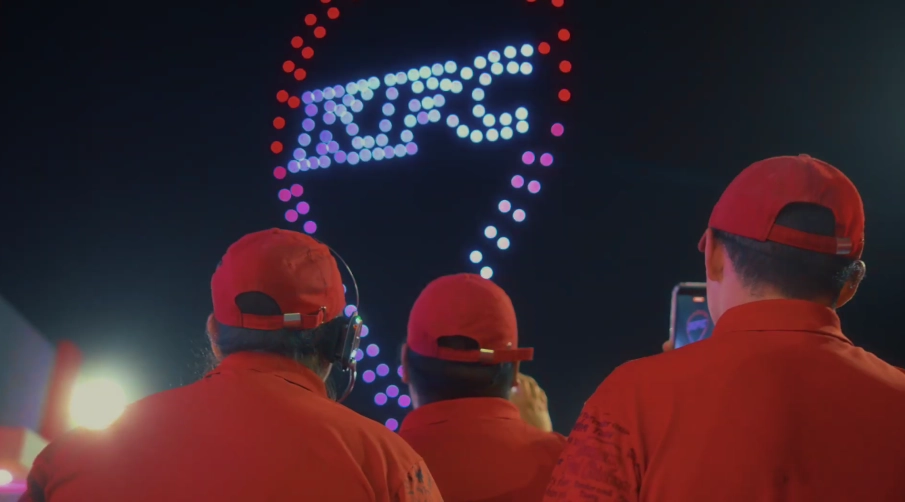
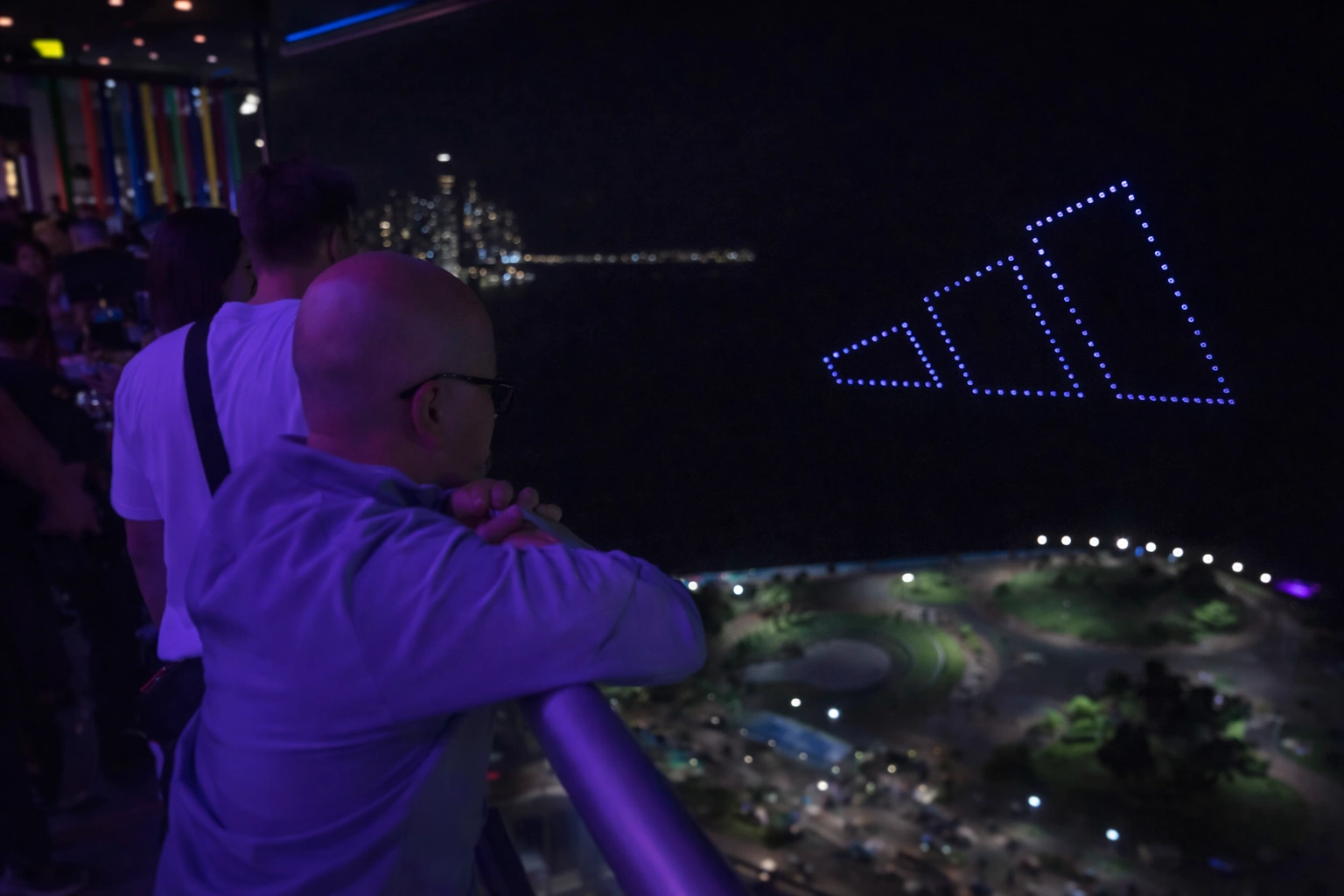
Furthermore, drones offer something fireworks never will: Branding. For sponsors at Art Basel or the Winter Music Conference, the ability to project a massive, scannable QR code or a 3D animation of their product in the sky is an invaluable marketing tool.
The Verdict: Goodbye to Fireworks?
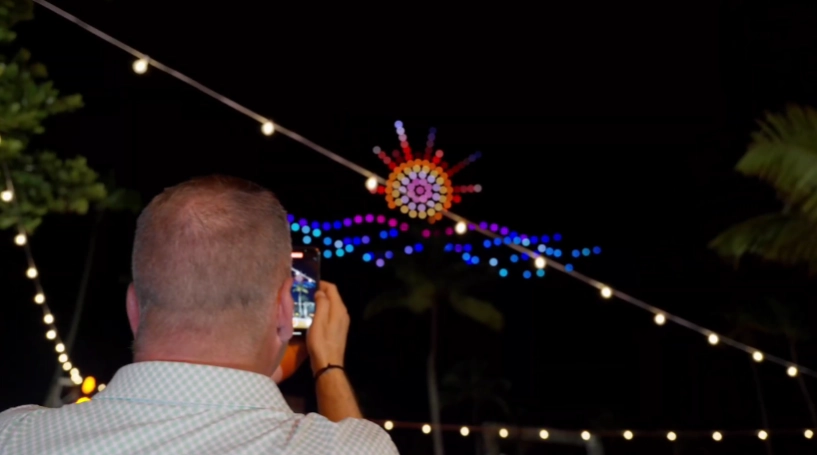
We probably won’t see a total disappearance of pyrotechnics tomorrow. Miami loves its roots, and nostalgia carries a lot of weight. But the trend is clear: drones are winning the race for luxury private events, eco-friendly festivals, and urban celebrations where noise pollution is a deal-breaker.
The technology is moving at a breakneck pace, and what seems like a novelty today will be the gold standard tomorrow. Miami’s skyline is changing, and we have front-row seats to the transformation.
So, what would you prefer for your next big celebration in the 305: the classic roar of gunpowder or the choreographed dance of a thousand smart lights?